
Betting Exchanges and Sharp Sportsbooks in Canada

If you bet regularly and follow the market, you’ve probably noticed that odds for the same event can vary significantly across different platforms. The reason lies in the margin – the bookmaker’s guaranteed profit. For some operators, it reaches 7–10%, while for others it’s as low as 2–3%. We discussed this topic in more detail in our previous article.
These differences come from fundamentally distinct business models. Most popular bookmakers target casual users – the so-called recreational players who place bets occasionally for entertainment. Such platforms earn substantial profits from the margin. They can afford to spend millions on advertising and marketing, which explains their popularity.
But there’s another type of operator: betting exchanges and sharp sportsbooks, which cater to more experienced bettors and offer completely different conditions. These platforms are less known among Canadian players. According to statistics, only about 15% of bettors use them. Yet they’re worth attention – especially for those who approach betting analytically and seek the best odds.
In this article, we’ll explain what betting exchanges and sharp sportsbooks are, how they differ from traditional bookmakers, how accessible they are in Canada, and most importantly, when it makes sense to use them.
What is a betting exchange?
A betting exchange is a platform where players bet not against a bookmaker but against each other. The exchange itself acts only as an intermediary, providing the infrastructure for transactions and taking a small commission from winnings. In other words, it’s a classic peer-to-peer model.
How does it work in practice? Imagine a soccer match between two teams. On a regular bookmaker’s site, you can usually bet on one team’s victory or a draw.
On a betting exchange, you have two options:
- Back bet – a traditional bet for an outcome. You bet that an event will happen (Team A will win).
- Lay bet – a bet against an outcome. You bet that an event will not happen (Team A will not win). Essentially, you act as a bookmaker for another player.
This ability to place lay bets opens new strategic possibilities – from hedging risks to trading odds during a match.
The exchange doesn’t care who wins – it earns on the commission taken from the winner’s profit. Frequently, this commission ranges from 2% to 5%, depending on the platform and betting volume. Since the exchange doesn’t risk its own money, it doesn’t need to include a margin in the odds. As a result, players get significantly better prices – often 20–30% higher than those offered by traditional bookmakers.
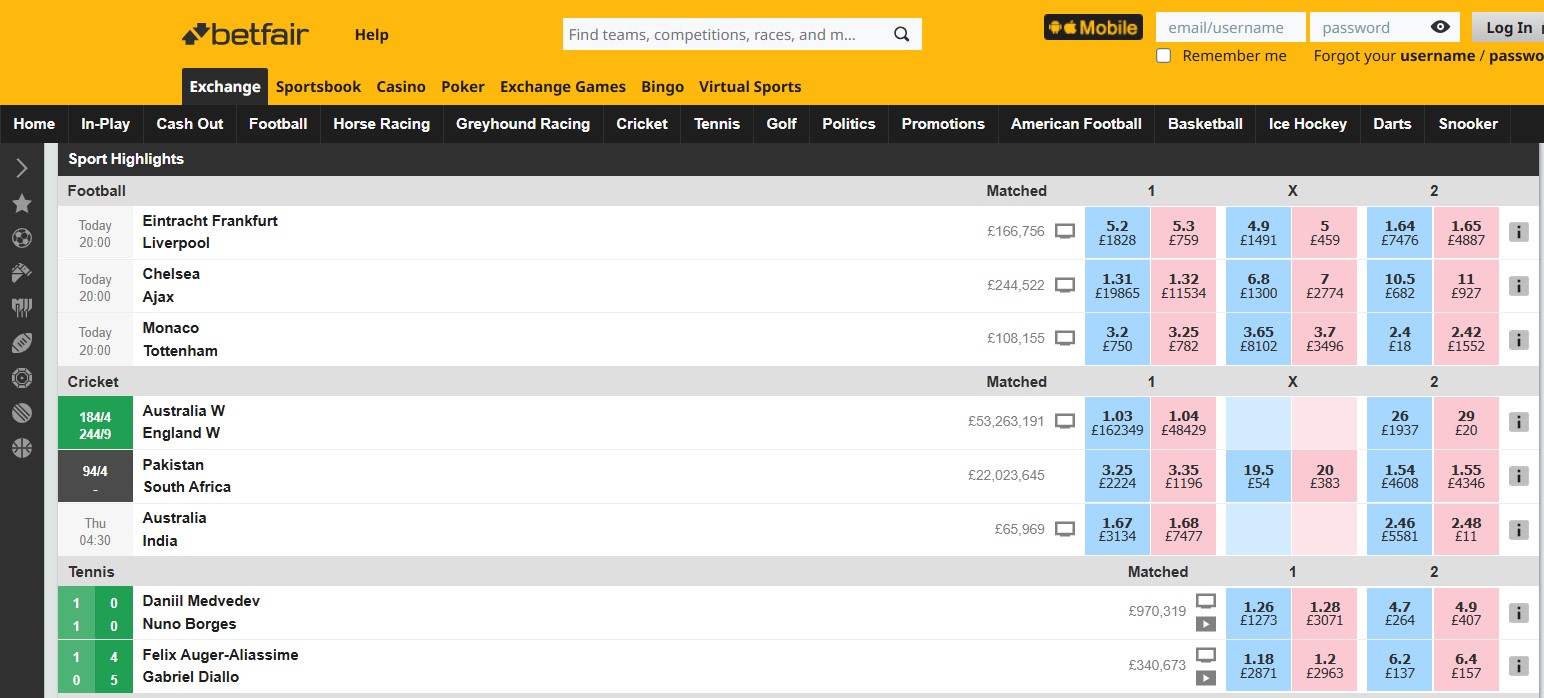
The largest betting exchange in the world is Betfair, processing billions of dollars in bets every year.
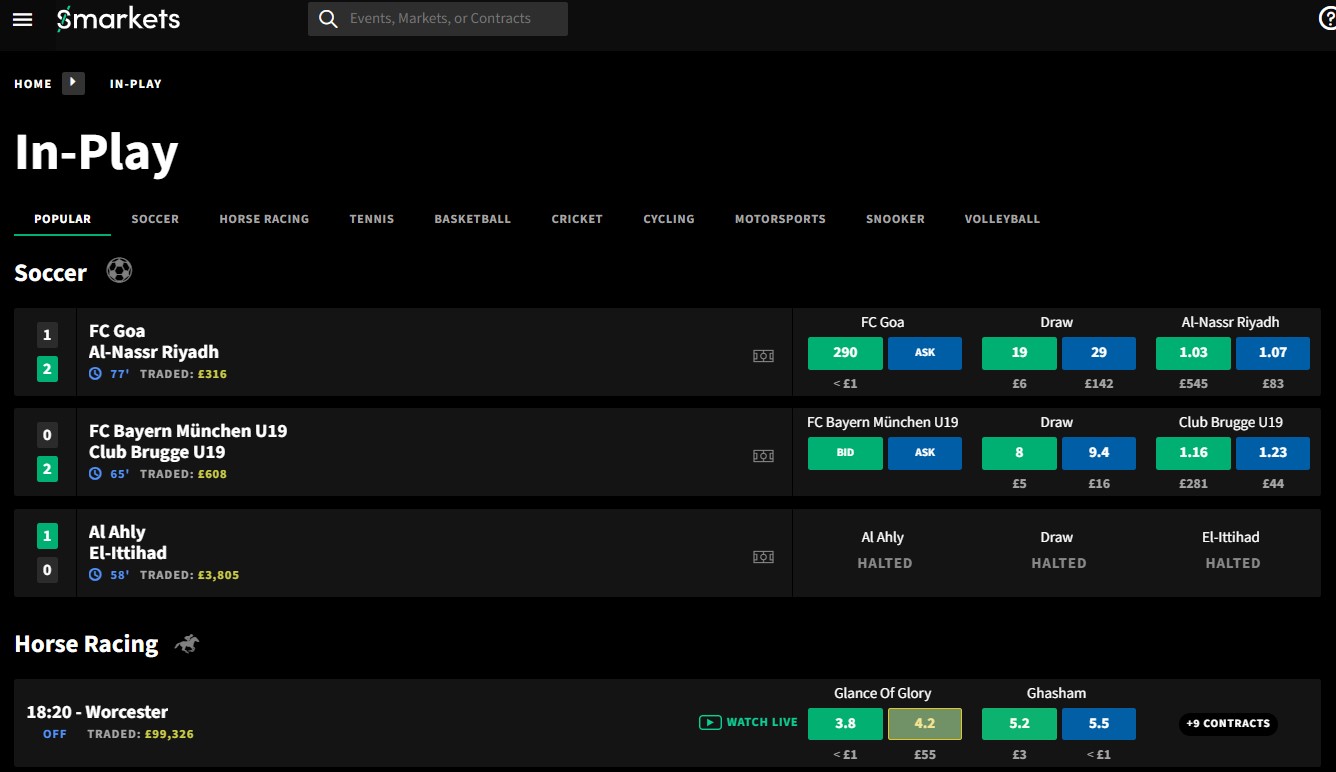
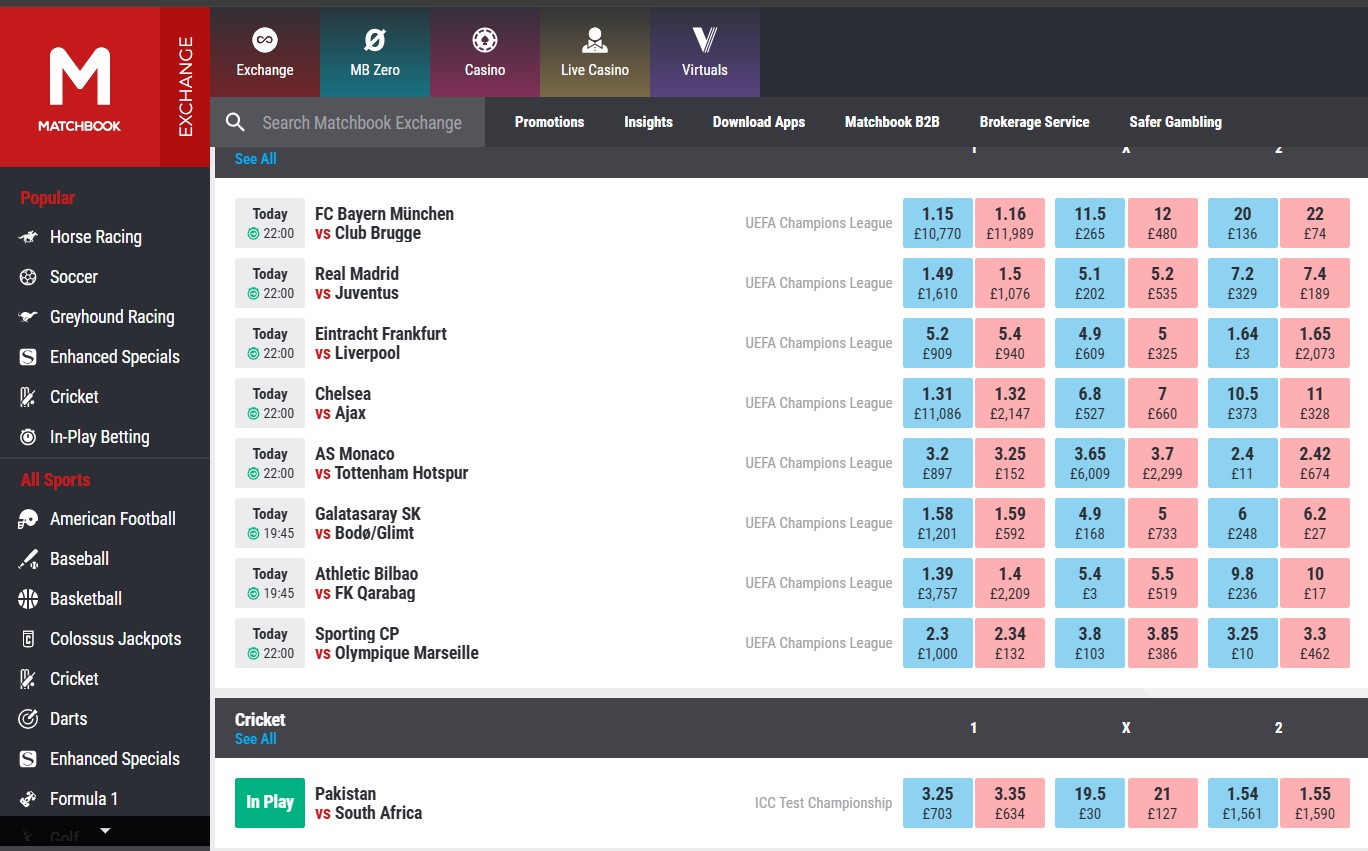
Other popular exchanges include Smarkets (with a modern interface and low fees) and Matchbook (offering just 1–2% commission for active users).
Unlike a bookmaker, which always accepts your bet, an exchange requires another player with the opposite view. For major events such as NHL games or top soccer leagues, this isn’t a problem – volumes reach millions. But for less popular events, liquidity can be limited, especially if you want to place a large stake.
What is a sharp sportsbook?
If betting exchanges are peer-to-peer platforms, sharp sportsbooks are still traditional bookmakers – but with a completely different approach. The term sharp in betting refers to an experienced player with a deep understanding of statistics and value. Sharp sportsbooks are companies that specialize in serving that type of audience.
Their main features include:
- Low margins. While traditional operators build in 5–10% margins, sharp sportsbooks work with just 2–3%, sometimes even less. They profit from transaction volume rather than from players’ losses.
- High limits. Sharp sportsbooks accept large bets – from tens to hundreds of thousands of dollars per event. High volume allows them to balance risk and fine-tune their lines.
- No restrictions for winning players. This is perhaps the key difference. Sharp sportsbooks don’t limit successful bettors or block their accounts. On the contrary, they use data from professional players to adjust their lines, which helps them stay competitive.
- Fast reaction to events. Odds at sharp sportsbooks change instantly – as soon as significant news appears (like a player injury, weather change, or venue shift), the line is updated. This makes their odds the most accurate reflection of true probabilities.
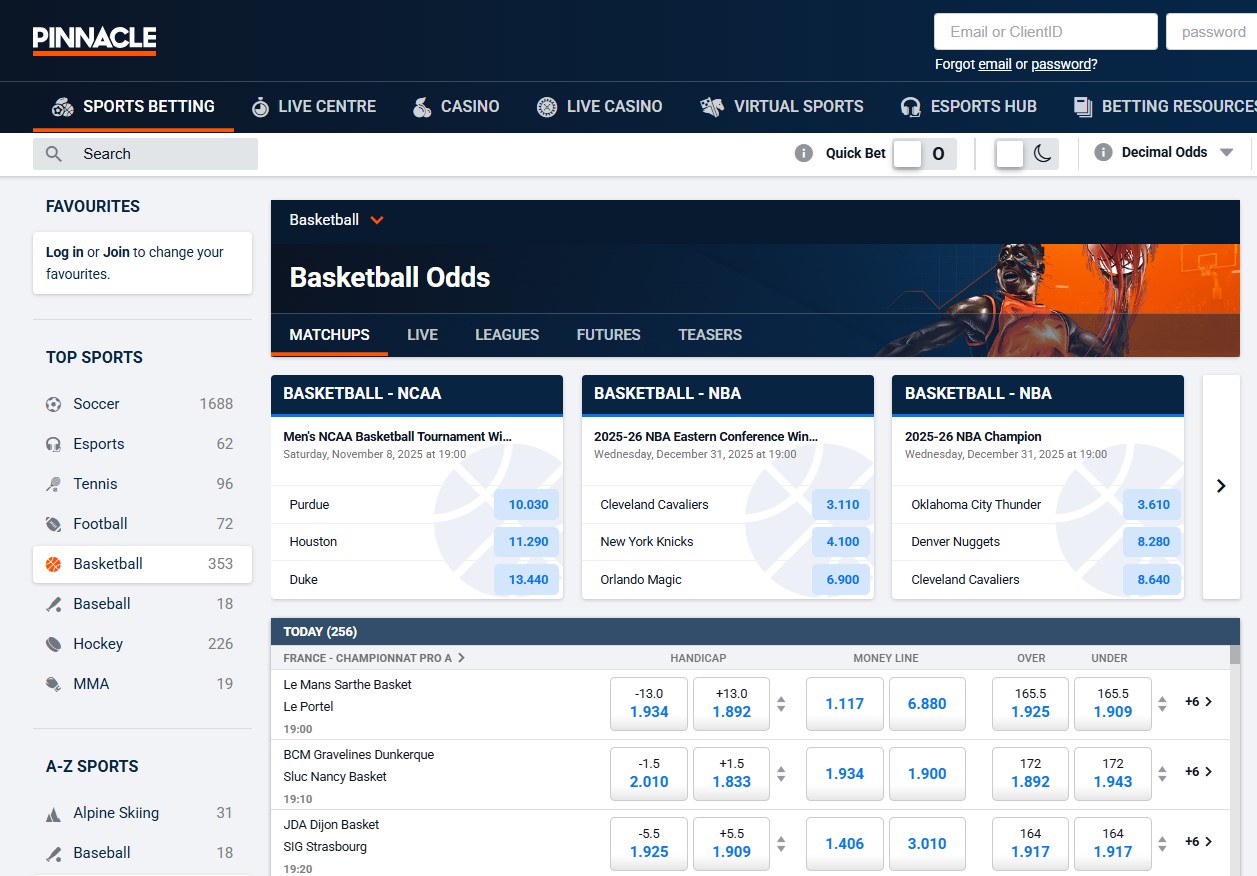
Among sharp sportsbooks, Pinnacle is the undisputed industry leader. It’s known for the lowest margins in the business and for openly welcoming winning players. It’s available to Canadians and is considered the gold standard for fair odds.
You might wonder how sharp sportsbooks make money. The answer is through balancing the flow of bets on both sides of an event. When too much money comes in on one outcome, they adjust the odds to attract bets on the opposite side. Their goal is to keep roughly equal volumes on both outcomes and earn from the small built-in margin.
Many professional bettors use sharp sportsbooks as indicators. If Pinnacle’s odds differ significantly from those of a mainstream bookmaker, it may signal a value bet – a situation where the offered odds exceed the event’s real probability.
Why betting exchanges and sharp sportsbooks aren’t very popular in Canada
Considering that about 19% of Canadian adults place sports bets online, only around 2–3% use exchanges or sharp sportsbooks. That’s indeed a small niche audience.
Why such low numbers? First, limited access. After the legalization of single-event sports betting in 2021, regulation moved to the provincial level, creating a fragmented market. Access to global exchanges like Betfair, Betdaq, and Matchbook isn’t banned, but users often need intermediaries – betting brokers.
Second, the entry barrier. Betting exchanges and sharp sportsbooks require a deeper understanding of betting principles. You need to grasp value concepts, compare lines, and understand how lay bets work. Most Canadians prefer simple wagers on winners in familiar sports, and even live betting isn’t particularly popular – only 22% have ever placed in-play bets. In other words, they just want to back their favourite team, not dive into analytics or complex tools.
Despite limited availability and higher learning requirements, there’s one clear advantage for Canadians who use exchanges or sharp sportsbooks: winnings aren’t taxed. That’s a significant benefit for professional bettors.
Should you bet on exchanges and sharp sportsbooks?
Betting exchanges and sharp sportsbooks aren’t for everyone. Here, patience, analysis, and discipline matter more than intuition or emotion.
Exchanges and sharp sportsbooks make sense if you:
- already have successful experience with traditional platforms;
- faced account restrictions from regular bookmakers;
- use arbitrage or value-betting strategies;
- are ready to invest time in learning more complex tools;
- have a sufficient bankroll (starting from $1,000).
Under these conditions, the advantages of low margins, fair lines, and flexibility in bet sizes become fully evident. Exchanges and sharp sportsbooks help maximize efficiency and extract a mathematical edge.
These platforms are not the best choice if you:
- are just starting out;
- bet mainly for fun or excitement;
- don’t care about differences in odds;
- prefer small stakes;
- don’t want to deal with brokers, commissions, or international payments.
For such players, licensed Canadian operators with simple registration and payouts in local currency are a more practical choice.
Conclusion
Betting exchanges and sharp sportsbooks aren’t alternatives to traditional bookmakers – they’re an expansion of options for professionals. They offer more freedom and precision but require knowledge and responsibility. If you take betting seriously and are willing to learn, switching to these platforms becomes a natural step forward. But if the process and excitement matter more to you, classic bookmakers will remain the best option.
Either way, always bet responsibly – as we discussed in our previous article.
Relevant news

Top 5 Movies That Can Offer Insights for Canadian Bettors
We all watch movies to relax and enjoy a good story – on our own…

How Sportsbook Ads Are Changing the Perception of Sports Broadcasts in Canada
In 2021, Canada legalized single-event sports betting, and in 2022, Ontario opened its iGaming market…

How Technology Is Transforming Online Sports Betting in Canada
Just ten years ago, placing a bet on a match meant visiting a sportsbook website,…

Why Canadian Bettors Prefer Bet365 and Other Key Habits
Ahead of one of the most event-packed sports years – with the Winter Olympic Games,…

The Canadian Bettor’s Calendar for 2026
2026 is set to be a busy year for sports betting fans. The main feature…

Online Betting in Canada: When Convenience Turns Into a Problem
Online betting has become firmly embedded in the habits of Canadian players. There is no…