
What Happened in Canadian Betting: February 2026
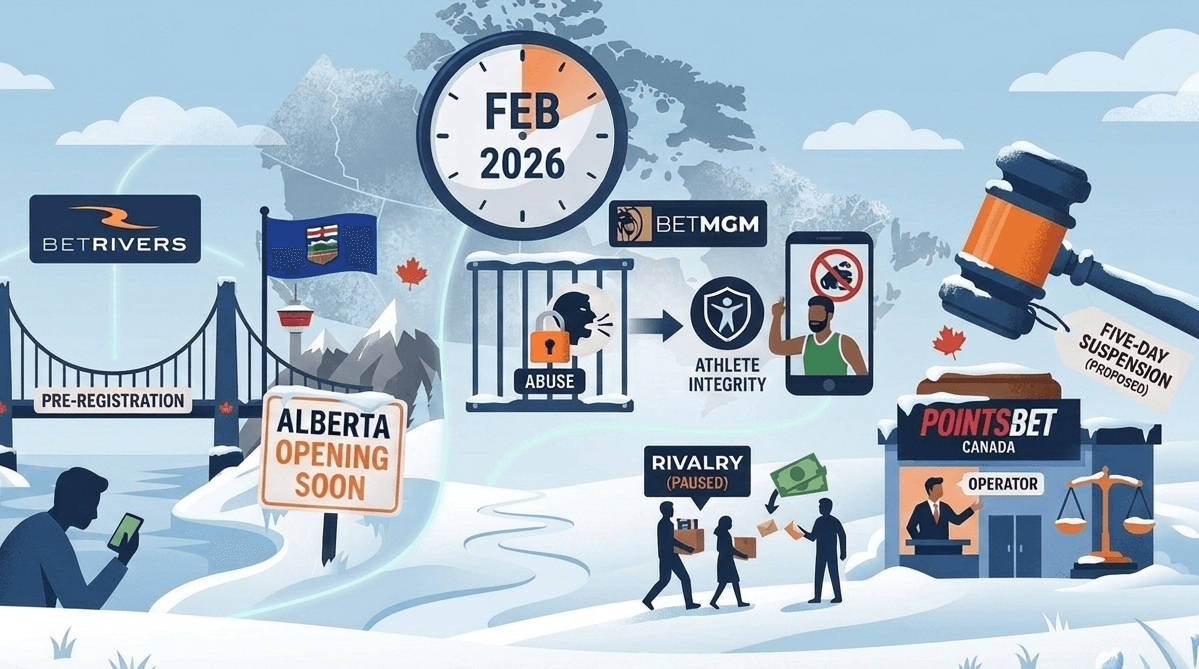
The sports betting landscape in Canada continues to shift month by month. What happens behind the scenes, from regulatory decisions to operator strategies, often shapes the experience bettors see on their screens. February brought several developments worth noting. In this digest, we review four stories that highlight where the market stands today and where it could be heading next.
BetRivers builds momentum before Alberta launch
BetRivers made a notable marketing move in February by sponsoring CBC/Radio-Canada’s broadcast of the 2026 Winter Olympics in Milano Cortina. The partnership gave the brand prominent nationwide exposure during one of the most-watched sporting events in Canada.
At the same time, the company launched pre-registration for players in Alberta, signalling its intention to enter the province’s future regulated iGaming market. Interested users can already sign up for early access and promotional offers ahead of the official market launch.
This move fits a broader trend we’ve been following. Alberta is actively preparing to launch a competitive iGaming market – something we previously wrote about when discussing the province’s regulatory plans. Operators clearly expect the province to become the next major battleground after Ontario.
For BetRivers, the strategy is clear. The company wants to build brand recognition. By combining Olympic exposure with early sign-ups, it increases the chances that Alberta bettors will already recognize the brand when legal wagering platforms go live.
From an industry perspective, this also shows how important media partnerships remain in Canada. Sportsbooks are not just competing on odds – they’re competing for visibility. And the Olympics provided one of the biggest stages available.
BetMGM introduces tougher rules for bettor behaviour
BetMGM introduced an important policy change in February: it updated its terms of service to explicitly ban harassment directed at athletes, coaches, or sports officials. Under the new rules, accounts can be suspended if users send abusive or threatening messages toward sports participants.
Technically, sportsbooks already had the ability to suspend accounts for misconduct. However, the updated wording makes the rule more explicit and easier to enforce. BetMGM says the change reflects its commitment to protecting sports integrity and maintaining a safer betting environment.

The issue has become increasingly visible in recent years. Professional athletes across several sports have reported receiving abuse from frustrated bettors after losing wagers. Industry groups and leagues have started pushing sportsbooks to address the problem more directly.
This is also something we’ve discussed before on our blog. In an earlier article, we explained why athletes aren’t responsible for your betting losses. Sports outcomes are unpredictable by nature, and targeting players after a losing wager crosses a line that sportsbooks and regulators increasingly refuse to tolerate.
From a broader perspective, this policy shows that the Canadian betting ecosystem is maturing. Responsible gambling conversations no longer focus only on players. They also include how bettors interact with athletes, teams, and the wider sports community.
Rivalry hits pause and considers its future
Toronto-based betting operator Rivalry made one of the most surprising announcements of the month. The company suspended all player activity and significantly reduced its operations.
According to the company, the decision followed recent performance volatility. Rivalry has laid off a large portion of its workforce and paused platform activity while it explores options such as restructuring, asset sales, or other corporate transactions.
For customers, the key point is that player funds are being returned, and the company has stopped accepting wagers during this period. Rivalry indicated that there is no guarantee the platform will resume operations in its current form.
The situation highlights how competitive the online wagering sector has become. Even companies with strong brand recognition – especially in niches like esports betting, where Rivalry built its reputation – face significant pressure when operating costs rise, and market conditions shift.
In an industry dominated by global operators with deep resources, smaller platforms often struggle to maintain growth. Rivalry’s decision may become a case study in how quickly fortunes can change in the digital betting space.
For Canadians, it’s a reminder of one key advantage of regulated markets: player protections and oversight remain in place even when operators face financial challenges.
PointsBet disputes Ontario regulator’s penalty
Regulatory oversight took centre stage in Ontario this month after the Alcohol and Gaming Commission of Ontario (AGCO) proposed a five-day suspension of PointsBet Canada’s operator licence. The regulator claims the company failed to properly identify and report suspicious betting linked to the Jontay Porter match-fixing scandal.
The incident dates back to 2024, when the former Toronto Raptors player manipulated his performances so certain player-prop bets would win. The scheme ultimately led to a lifetime NBA ban and criminal charges.
AGCO alleges that PointsBet initially told regulators it had not offered wagers on Porter. However, the company later acknowledged that such bets had been available on its platform. Regulators say this delay represented a failure to monitor and report suspicious activity.

PointsBet disputes the severity of the proposed penalty and plans to appeal the decision before the Licence Appeal Tribunal. The operator argues that the issue resulted from human error during an organisational transition, not a systemic compliance failure.
Regardless of the outcome, the case highlights an important reality of regulated betting markets: sportsbooks act as the first line of defence against match manipulation. Regulators expect operators to detect unusual betting patterns and report them quickly.
For bettors, this type of oversight ultimately protects the integrity of the games themselves, which is essential for a healthy wagering ecosystem.
February takeaways
February’s headlines show several important trends shaping the Canadian betting landscape. Operators continue to position themselves for new market opportunities, particularly in Alberta. At the same time, regulators and sportsbooks are tightening rules around integrity, player behaviour, and compliance. Meanwhile, smaller operators face increasing pressure in an industry dominated by global brands.
For Canadian bettors, the takeaway is simple: the market is becoming more structured and closely monitored. That combination will likely define the next phase of the local betting industry.
Relevant news

Updated Gambling Support System in British Columbia Explained
British Columbia ranks third in population among Canadian provinces and continues to show steady economic…

Bet365 and UFC Join Forces: What Canadian Bettors Should Know
The way people watch sports and bet on them is changing fast. In early 2026,…

What’s Holding Quebec Back From a Competitive Betting Market?
While 73% of Quebec residents play on offshore sites, the province loses more than $300…

January 2026 Highlights: Bet365 Partnership and Other Canadian Betting Updates
The beginning of the year is not always rich in news, but that is not…

New Online Sports Betting Standards in Alberta
On January 13, 2026, Alberta Gaming, Liquor and Cannabis (AGLC) published an 85-page document titled…

The Canadian Bettor’s Calendar for 2026
2026 is set to be a busy year for sports betting fans. The main feature…