
Young Canadians and Betting: How Education Can Help Prevent Gambling Harm

Gambling, including sports betting, has become an integral part of the digital world – where youth spends a significant amount of time and are frequently exposed to such activities. A study by MediaSmarts revealed that about one in five young Canadians engage in online betting or casino games. Even if they aren’t actively looking for gambling platforms, they’re likely to encounter ads on streams, poker broadcasts, or social media. These ads often portray sports betting as fun, social, and risk-free. This marketing strategy is highly effective: four in ten young people say that gambling ads make them want to try it. Incidentally, such advertising is under strict regulation in Ontario, as we discussed in this article. Still, neither that measure nor age restrictions (registration on betting platforms is allowed only from age 19 in most provinces and territories) seem to sufficiently protect young minds, often contributing to the development of gambling addiction.
This leads to an important question: can education help prevent harm? Or does it risk legitimizing betting in the minds of the younger generation? With the increasing accessibility of betting, educational initiatives are becoming more relevant than ever – and we’ll look at this here.
Why are young Canadians drawn to betting?
Late teens and early twenties interest in betting stems from a variety of influences. First and foremost, the mechanics of games – bonuses and random wins – draw attention. This creates a false sense of easy success and an illusion of control over risk.
Another major factor is the normalization of betting. Popular bloggers, athletes, and esports players often talk about it on their platforms. To youth followers, these personalities are role models – and betting becomes a way to feel closer to them. This fosters a sense of belonging to the world of the rich and famous, particularly among those who haven’t yet reached financial independence.

Research by the Responsible Gambling Council is also telling. Among people planning to bet on a major game, 47% cited the desire to win money and 44% said it enhances the excitement of the event. Alarmingly, one in ten (9%) place bets to recoup earlier losses. This tactic typically leads to greater losses, but is unfortunately common among youth.
Ultimately, the desire for quick cash is the primary driver. But the process itself – the anticipation of a win, the thrill of risk, the emotional rollercoaster – can be addictive. Many teens and twenties don’t view betting as a game, but as a chance to change their lives. Instagram, TikTok, YouTube, and streaming platforms are flooded with content about betting: ‘successful’ predictors, win showcases, and direct calls to try it. This creates the illusion of easy money and encourages experimentation – without considering the consequences.
How does the younger generation underestimate the risks of sports betting?
Many young people are unaware of the risks tied to betting. Most lack experience managing money, and in a digital environment, losses often don’t feel real. Money seems to “disappear” unnoticed – especially when topped up via mobile apps or a parent’s credit card. Against this backdrop, any betting experience feels like entertainment, not a conscious financial choice.
Strategic thinking is typically underdeveloped: young bettors rarely calculate long-term losses or understand how gambling works. Many believe they can “win it back” or that they just had bad luck. Another issue is a lack of basic betting literacy. Youth doesn’t know how odds work, what bookmaker margins mean, or how addiction develops. This makes them especially vulnerable – they think they’re in control, when in fact they cannot accurately assess the risks.
What can Canada’s gambling industry do?
Since legal online betting and casinos in Canada are still working on effective measures to limit youth engagement, it’s worth looking at strategies from other countries. In the U.S., where youth interest in betting is also rising, the industry is responding not just with restrictions but with educational programs. One example is the Gaming Literacy Aiding Decisions (GLAD) initiative by Rush Street Interactive, in partnership with Integrity Compliance 360. Targeted at high school students, this program helps them understand the nature of gambling and the risks involved.
Instead of excluding teenagers from the betting conversation, GLAD equips them with the tools to make informed choices. The educational approach includes lectures, workshops, and accessible materials integrated into school curricula. This method aims to reduce negative outcomes, raise awareness, and lower the risk of addiction.
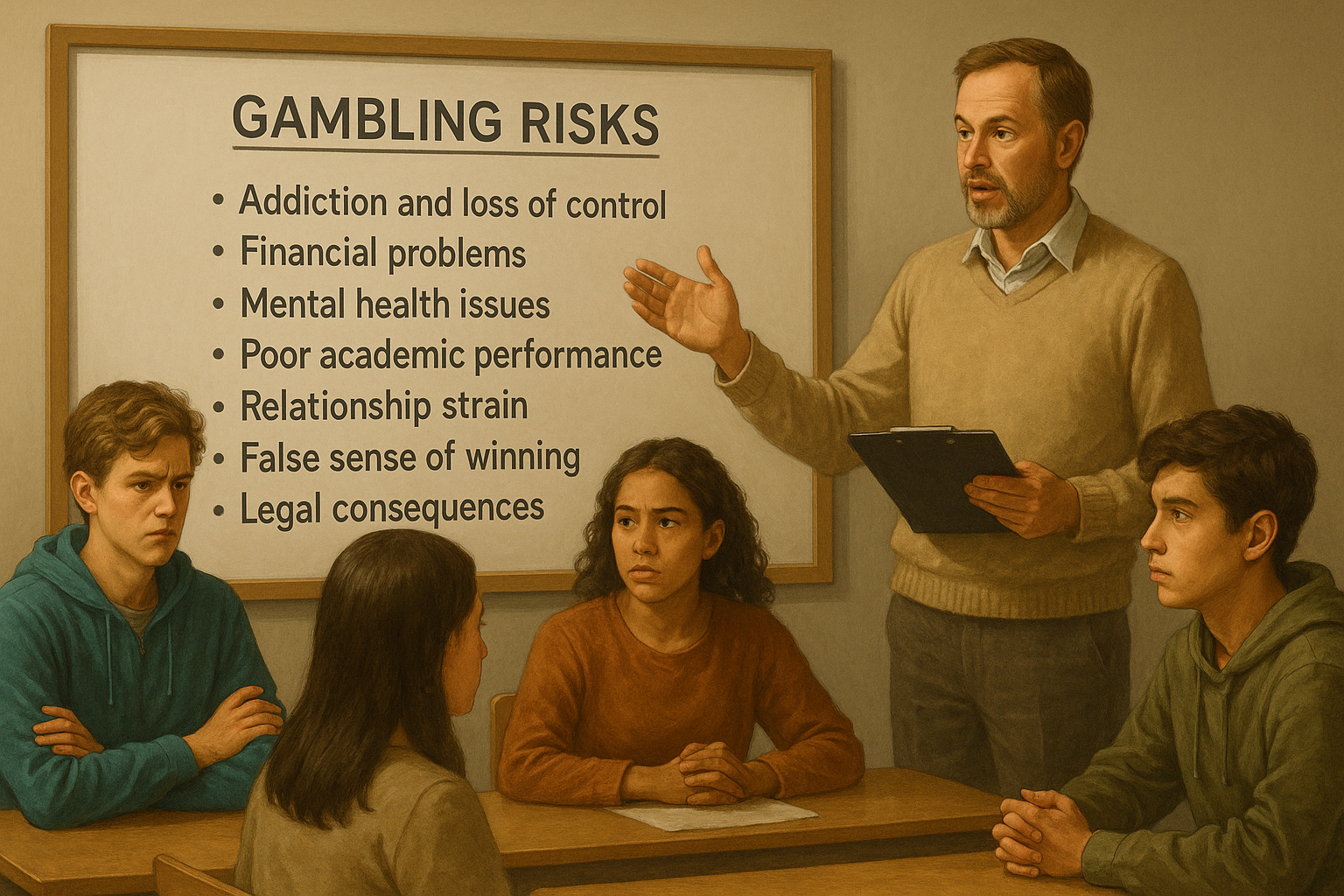
That said, Canada is not entirely inactive. For instance, the NFL Foundation supports research on gambling addiction among college students – valuable groundwork for developing educational programs. We previously covered this in one of our articles.
Should we talk to emerging adults about online betting?
The idea of introducing gambling literacy programs for youth generates mixed reactions. Supporters argue that education raises awareness. Learning about the risks and mechanics of gambling can help prevent addiction and promote a healthier attitude toward betting. Moreover, involving parents and schools in these initiatives creates a supportive environment. This way, emerging adults understand that if they face dependency or financial hardship, they won’t be left to deal with it alone.
On the other hand, critics worry that education may normalize gambling in the minds of young people. Turning it into a subject of discussion could be seen as encouragement. There’s also a risk of early involvement – where betting is perceived as harmless fun rather than a potential danger. It’s also hard to draw a clear line between educational content and marketing, raising ethical concerns about these initiatives.
That’s why it’s essential to involve addiction specialists, psychologists, and educators in the learning process. They can help design programs with a focus on prevention and support. The best outcomes occur when educational initiatives are implemented through school systems or independent organizations – without ties to gambling operators. This approach keeps the ethics intact and minimizes the risk of early exposure. So yes, education is needed – but it must be approached with care and responsibility.
Relevant news

Updated Gambling Support System in British Columbia Explained
British Columbia ranks third in population among Canadian provinces and continues to show steady economic…

Top 5 Movies That Can Offer Insights for Canadian Bettors
We all watch movies to relax and enjoy a good story – on our own…

How Sportsbook Ads Are Changing the Perception of Sports Broadcasts in Canada
In 2021, Canada legalized single-event sports betting, and in 2022, Ontario opened its iGaming market…

How Technology Is Transforming Online Sports Betting in Canada
Just ten years ago, placing a bet on a match meant visiting a sportsbook website,…

Why Canadian Bettors Prefer Bet365 and Other Key Habits
Ahead of one of the most event-packed sports years – with the Winter Olympic Games,…

The Canadian Bettor’s Calendar for 2026
2026 is set to be a busy year for sports betting fans. The main feature…